Web Analytics

Category Archives: Mixing

How to Fix a Muddy, Harsh, or Distorted Suno Track

Suno track in a DAW showing waveform and EQ analysis for fixing muddy harsh and distorted audio

When a Suno track does not sound finished, three descriptions come up more often than almost anything else: muddy, harsh, and distorted. The problem is that these words describe very different technical issues, even though they can appear in the same song at the same time. A muddy track usually has too much overlapping energy […]

Top 15 Best Resonance Suppressor Plugins in 2026

Best resonance suppressor plugins for controlling harsh frequencies, resonances, and spectral buildup

The best resonance suppressor plugin in 2026 is oeksound Soothe3 if you want the most complete premium tool for automatic dynamic resonance control. FabFilter Pro-Q 4 is the best all-round EQ choice if you want manual control; TBProAudio DSEQ3 is a strong technical Soothe alternative; Mastering The Mix RESO is great for guided resonance hunting, […]

How to Use Plate Reverb Without Harsh Vocals or Muddy Drums

Plate reverb can add vocal presence, drum size, density, and a polished sense of space, but it can also make a mix sound harsh, metallic, or muddy when the return contains too much high-frequency energy, low-mid buildup, or an unnecessarily long decay. Plate reverb can be difficult because it creates a dense field of reflections […]

How Mix Notes Help You Finish Songs Faster and Stop Overmixing

Mix notes help you turn vague impressions into clear, repeatable decisions. Instead of thinking that the vocal “needs work,” you can write that it disappears when the guitars enter during the second chorus. That one sentence gives you a specific problem, a location, and a reason to investigate it. Many producers and engineers do not […]

How Do You Know When a Mix Is Finished?

Mix finishing checklist for balance, clarity, translation, and emotional impact

A mix is finished when it supports the song, translates reliably, contains no distracting technical problems, and further changes no longer produce meaningful improvements. You do not need to eliminate every imperfection, match every reference exactly, or keep processing until the session looks complicated. Knowing when to stop mixing is difficult because your ears adapt, […]

EQ or Compression First? How to Choose the Right Plugin Order

EQ and compressor plugins showing how to choose the right processing order in mixing

Quick Answer: Use EQ before compression to remove rumble, mud, harsh resonances, or unwanted frequencies before they trigger the compressor. Use compression before EQ when you want to control the natural dynamics first, then shape the tone after. In many real mixes, the best chain is cleanup EQ first, compression second, and tonal EQ after […]

2-Track Mixing: How to Mix Vocals Over a Finished Beat

2-track mixing session with a finished beat and separate vocal track in a DAW

Quick Answer: 2-track mixing means mixing vocals to one finished stereo instrumental track, usually a beat file. The engineer can adjust the vocal volume, clarity, compression, EQ, reverb, delay, and how the vocal sits within the beat, but cannot separately change the drums, bass, synths, or other instruments within the instrumental. If you have separate […]

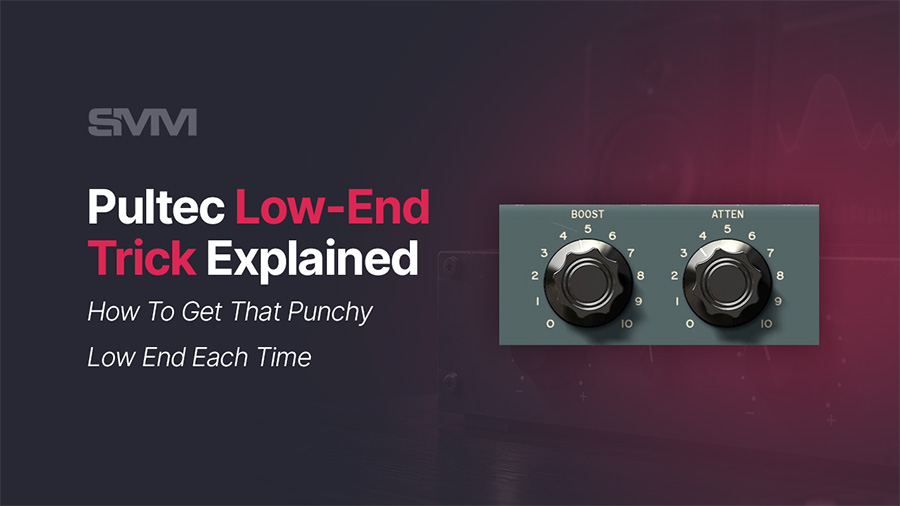
Pultec Low-End Trick Explained: How to Get Punchy Low End

Pultec low-end trick using analog-style EQ for punchy bass and low frequencies

Quick Answer: The Pultec low-end trick means boosting and attenuating the same low-frequency setting on a Pultec-style EQ, usually 60 Hz or 100 Hz. It works because the boost and attenuation curves are not identical, so the EQ adds weight while controlling boom. Use it on kick, bass, 808s, drum bus, mix bus, and mastering […]

This site uses cookies to offer you a better browsing experience. By browsing this website, you agree to our use of cookies.